

Holding someone accountable sounds simple until you are sitting across from a team member who is exhausted, upset, or certain they did nothing wrong. You know the work matters. You also know this person spends their days helping people through some of the hardest moments of their lives. Finding words that respect both truths takes practice.
These examples of holding someone accountable give Human Services leaders a place to start. Each conversation connects an observed behavior to its impact, makes room for the person’s explanation, and ends with an agreement you can check. For the broader leadership approach, start with how to hold employees accountable.
The situations below are illustrative, not accounts of actual employees or clients. Adapt the language and timing to your program’s standards, your authority, and the work in front of you.
Before You Start: Know the Standard and the Facts
Write down what you actually observed. “Three notes were unfinished at the agreed review time” gives you something to discuss. “You do not care about documentation” turns an assumption into an accusation. Check the expectation too. Was the deadline clear? Did the person have access, training, and enough time?
If those pieces were missing, own your part and reset the expectation clearly. You can address the unfinished work while acknowledging that your instructions needed work as well.
The Center for Creative Leadership’s Situation-Behavior-Impact model separates the situation, observable behavior, and impact. Its extended approach adds inquiry about intent. That distinction matters: ask what happened before deciding why it happened.
Choose a private setting and enough time to listen. If someone faces an immediate safety risk, act through your organization’s safety process first. A planned coaching conversation must never delay a necessary protective response.
A Simple Conversation You Can Adapt
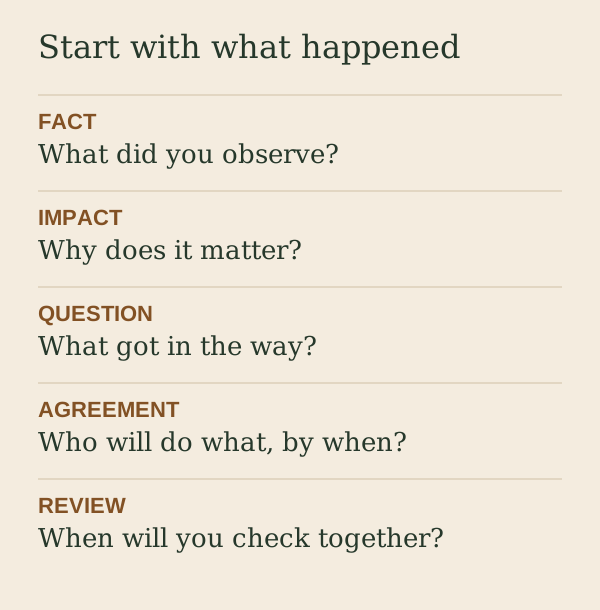
Try this sequence: “Here is what I noticed. Here is why it matters. What was happening from your perspective? What will we do next? When will we review it?” The question in the middle is real. Their answer may change the support, the timeline, or your understanding of the problem.
Keep the opening brief. Five minutes of evidence before the other person speaks can feel like a closing argument. Bring enough detail to be fair, then listen. Use the hard conversation checklist to prepare without scripting every possible response.
1. Documentation Was Not Finished as Agreed
The situation: You and a staff member agreed that certain notes would be ready for review Tuesday morning. Three were still unfinished. There is no immediate safety concern, but the missing information is holding up the next part of the work.
“We agreed these notes would be ready Tuesday morning. When I checked, three were unfinished, so I could not complete the review. Help me understand what got in the way.”
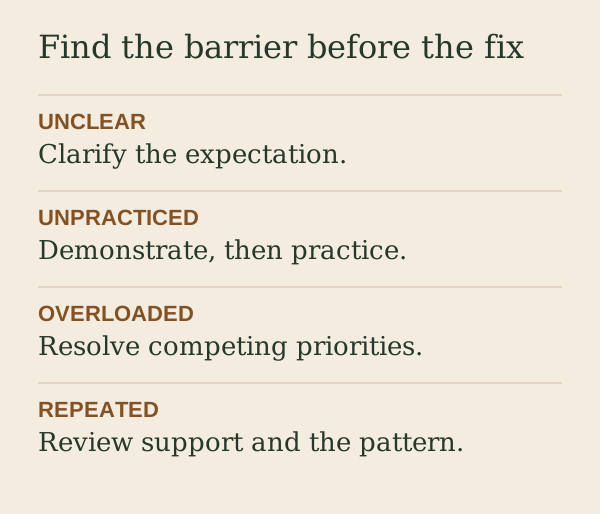
If the person describes an unexpected crisis, ask about the sequence of events. Which work took priority? When did they realize the agreement would be missed? Could they reach anyone for help? This gives you a better starting point than another reminder to manage time.
Close with a usable agreement: “Let’s confirm what can be completed today within your scheduled work time. I will help resolve the competing assignment. If the revised deadline becomes unrealistic, contact me before it passes. We will review the remaining notes together tomorrow morning.”
The example deadline is a conversation detail, not a documentation rule. Follow your program’s actual requirements and escalation process. When several people face the same bottleneck, also look at the process instead of repeating the same correction with each employee.
2. A Handoff Left the Next Shift Guessing
The situation: A routine handoff omitted an outstanding task and its owner. The next shift spent time tracking down information that should have been clear at the transition.
“At yesterday’s handoff, the outstanding transportation task did not have an owner or next step. The incoming team had to reconstruct the plan. Walk me through how you prepared that handoff.”
Ask the person to show you what they used. They may have followed an old template, assumed a colleague had already called, or misunderstood who owned the task. Address the actual gap. If they need practice, work through a sample handoff together without unnecessary client information.
Close with a usable agreement: “For the next three handoffs, identify each outstanding task, its owner, and the next action in the approved handoff process. I will check the first one with you before the transition, and we will review how the three went at supervision.”
That is a focused check with an end point. Hovering over every handoff indefinitely would make it harder for the person to build confidence. When the agreed practice improves, acknowledge it and return to your usual level of oversight.
3. Someone Keeps Interrupting a Colleague
The situation: During a team discussion, one staff member spoke over a colleague twice before the colleague could finish explaining a concern. Address the behavior without assigning a personality label.
“During this morning’s discussion, you began speaking twice while Morgan was still explaining the concern. I could not hear the full account. What were you trying to get across?”
The person may have important information. Let them explain it, then return to how the team shares information. Disagreement belongs in a useful discussion. Repeatedly preventing someone else from finishing makes that discussion harder.
The Agency for Healthcare Research and Quality’s DESC tool offers a structure for conflict: describe the situation, express concerns, suggest an alternative, and connect the outcome to team goals. It also recommends a private setting for resolving the conflict.
Close with a usable agreement: “In our next discussion, let the speaker finish. Write down the point if you are worried about losing it, then ask to respond. I will make sure there is space for your concern. We will check in after the meeting.” If tensions extend beyond this incident, use the guide to managing conflict between employees.
4. A Team Member Says the Workload Is Impossible
The situation: An agreed task is unfinished. The employee says they could not complete it while covering additional visits. Treat that as information to examine, not an excuse to dismiss or an automatic end to the discussion.
“The follow-up calls we agreed on were not completed. You are saying the added visits used the time you had set aside. Let’s look at the workload together and decide what can actually fit.”
Ask about the assignments, travel, interruptions, and available support. Avoid asking for private personal details to prove that the person is under pressure. Your job here is to understand the work and make a responsible decision about it.
Close with a usable agreement: “I will confirm which tasks take priority and arrange coverage for the conflicting assignment. You will complete the revised list and flag any new conflict before accepting more work. We will review the plan tomorrow.”
The employee still owns their agreed actions. You own the decisions and support within your role. If demand exceeds what your team can safely deliver, take that problem upward. Managing up clearly includes naming the tradeoff and requesting a decision, rather than quietly handing an impossible list back to the same person.
5. The Same Agreement Has Been Missed Again
The situation: You have already clarified the expectation, provided support, and held a review. The same behavior continues. Another vague reminder will not tell the person how serious the pattern has become.
“We discussed this expectation last Monday and reviewed the support on Thursday. The same part of the handoff was missing yesterday. We need to understand why the plan has not worked and decide the next step.”
Review the earlier agreement accurately. Did you provide the promised training or access? Did the employee use it? What does the actual work show? Keep the discussion grounded in the pattern rather than frustration about how often you have repeated yourself.
Close with a usable agreement: “We will record the expectation, the support available, and the next review date. I will consult the appropriate manager or HR contact about the next step under our process. I will explain that step clearly once it is confirmed.”
Use only the process you are authorized to use. Do not invent a three-strikes rule or threaten an outcome you cannot decide. Serious misconduct or safety concerns may require a different response from routine performance coaching. Follow your organization’s established process for that situation.
6. You Missed a Promise to Your Team
The situation: You promised an answer about a scheduling concern by Friday. Monday arrives, and you have not given the team an update. Leadership accountability belongs in the same conversation as employee accountability.
“I said I would update you Friday, and I did not. That left you waiting without knowing whether anything had changed. I should have told you I was still waiting for a decision.”
Give the information you actually have. Do not blame the next person up the chain or promise that you can make a decision outside your authority. A useful repair is specific enough that the team can tell whether you followed through.
Close with a usable agreement: “I will give you an update by noon Wednesday, even if the decision is still pending. If the timeline changes again, I will tell you before that update is due.”
Then keep the promise. It is easier to ask employees to flag a missed commitment early when you do the same. The guide to leadership accountability explores how your own follow-through sets the standard people experience.
When the Conversation Gets Defensive
Someone may say, “You only notice what I do wrong.” Acknowledge the concern without dropping the issue: “I hear that this feels one-sided. I want to understand that. We also need to resolve the missed handoff. Let’s take both seriously.”
If they disagree with your facts, check them. Ask what information you might be missing and correct your account when needed. You do not lose authority by being accurate. If they identify the same problem elsewhere on the team, commit to examining it fairly without discussing another employee’s private performance.
If either of you needs a pause, agree on when to resume and what must happen meanwhile. A pause should make a useful conversation possible. It should not leave a safety concern unattended or become a way to avoid returning to the subject.
Follow Through Without Taking Over
After the conversation, make a brief record through your approved supervision process. Capture the expectation, the employee’s perspective, the agreed action, your support, and the review date. Keep unnecessary client details out of informal notes. Confirm the agreement with the person so you can catch misunderstandings early.
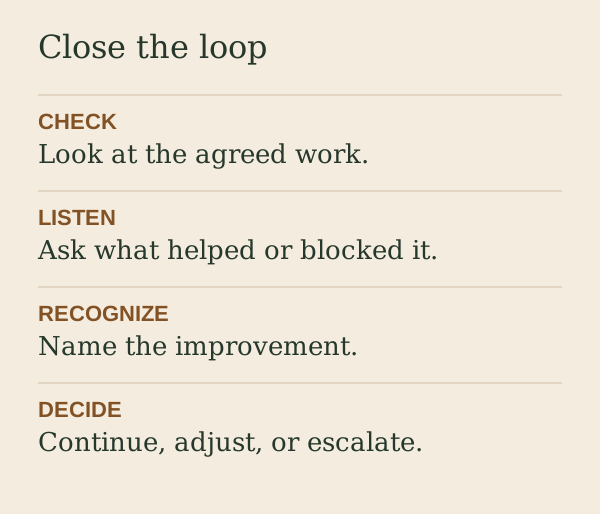
At the review, look at the work you agreed to check. Ask what helped and what remained difficult. If the expectation was met, name the improvement: “The handoffs had an owner and next action each time. The incoming team could pick up the work.” Recognition shows that you noticed the effort as well as the original problem.
If the agreement was missed again, examine the evidence and the support before choosing the next step. You may need another demonstration, a workload decision, or escalation through your performance process. Avoid moving the goalposts by introducing a new requirement at the review.
Try One Conversation This Week
Choose a routine issue you have been avoiding. Write one factual opening, one honest question, and one clear review point. Use the hard conversation checklist before you begin. You do not need a perfect speech. You need enough clarity to start and enough steadiness to listen.
Muddy Boots Leadership offers practical resources for people leading in Human Services. If you want one-to-one support with your leadership challenge, explore coaching through Threshold. Bring the situation you are navigating, including what you have tried and where you feel stuck.


